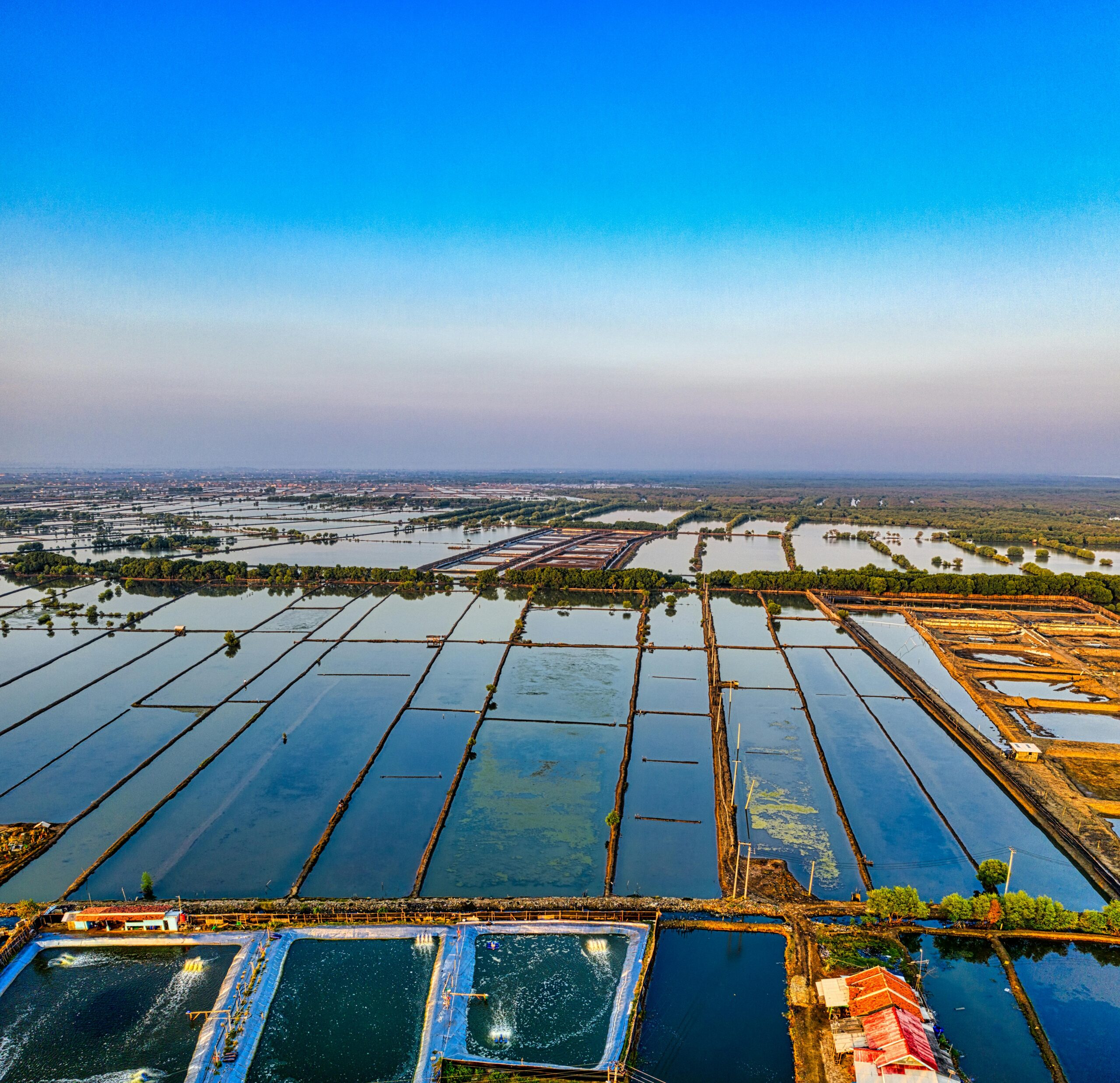
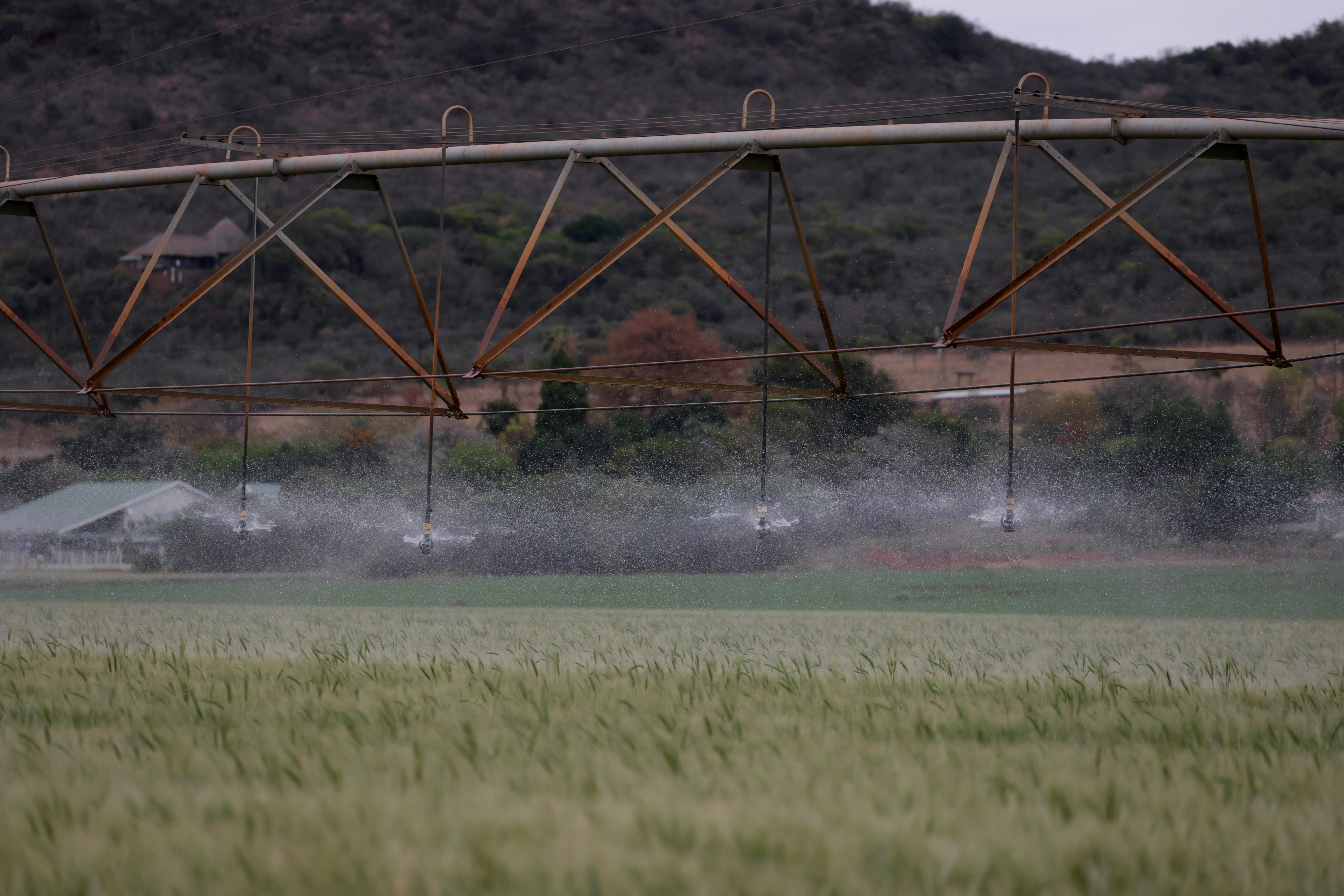
Ecosystem services represent nature’s economic contributions to humanity, and quantifying these invisible benefits through balance models is revolutionizing how we approach environmental management and sustainability.

🌍 The Hidden Economy of Nature: Understanding Ecosystem Services
Every day, nature provides humanity with services worth trillions of dollars—services we often take for granted. From the oxygen we breathe to the water we drink, from crop pollination to climate regulation, these ecosystem services form the invisible foundation of our economy and well-being. Yet, traditional economic models have consistently failed to account for these contributions, treating nature as an infinite resource rather than a valuable asset requiring careful management and investment.
The concept of ecosystem services emerged as a response to this oversight, providing a framework to identify, measure, and value the benefits that natural systems provide to human societies. These services span four main categories: provisioning services like food and water, regulating services such as climate control and flood prevention, cultural services including recreation and spiritual enrichment, and supporting services like nutrient cycling and soil formation.
Balance models have become essential tools in translating these natural processes into quantifiable metrics that policymakers, businesses, and communities can understand and incorporate into decision-making frameworks. By assigning economic values to ecosystem services, we create a common language that bridges the gap between environmental conservation and economic development.
💡 Why Quantification Matters for Environmental Decision-Making
The failure to quantify ecosystem services has led to centuries of environmental degradation. When forests are cleared for agriculture, traditional cost-benefit analyses only consider the immediate economic gains from crops or timber. They ignore the lost carbon sequestration, watershed protection, biodiversity habitat, and recreational opportunities that forests provided—often worth far more than the short-term profits from conversion.
Quantification transforms this equation by making the invisible visible. When a wetland’s value in flood protection, water purification, and fishery support can be expressed in monetary terms, suddenly the decision to drain it for development requires justification against measurable losses. This shift in perspective has profound implications for policy, investment, and land-use planning.
Balance models serve as the computational engines that make this quantification possible. These models integrate ecological data, economic valuations, and spatial information to assess trade-offs between different land uses and management scenarios. They help answer critical questions: What is the optimal balance between agricultural expansion and forest conservation? How much should we invest in restoring degraded ecosystems? What are the long-term economic consequences of current environmental policies?
The Real Cost of Ignoring Nature’s Balance Sheet
Research demonstrates that global ecosystem services contribute an estimated $125 to $140 trillion annually to the world economy—nearly twice the global GDP. Despite this staggering value, we continue to deplete natural capital at alarming rates. Between 1997 and 2011, the world lost an estimated $4.3 to $20.2 trillion in ecosystem services annually due to land-use change alone.
These losses aren’t abstract—they translate into real economic impacts. Coastal communities lose billions when coral reefs degrade and no longer protect shorelines from storms. Agricultural regions suffer when pollinator populations decline and crop yields fall. Cities face escalating costs for water treatment when upstream watersheds are destroyed. By failing to account for these services in our economic calculations, we systematically undervalue nature and make decisions that impoverish both present and future generations.
🔬 Methodologies for Measuring Nature’s Worth
Quantifying ecosystem services requires sophisticated methodologies that combine ecological science, economic theory, and data analysis. Several approaches have emerged as standards in the field, each with strengths and limitations depending on the context and available data.
Market-Based Valuation Approaches
The most straightforward method involves direct market valuation for services with existing prices. Timber, fish, agricultural products, and water for consumption all have established markets. However, this approach only captures a small fraction of ecosystem services—those with clear market transactions. Most services, like climate regulation or biodiversity maintenance, lack direct markets and require alternative valuation methods.
Revealed preference methods infer values from related market behaviors. The travel cost method, for example, estimates recreational value by analyzing how much people spend and how far they travel to visit natural areas. Hedonic pricing examines how ecosystem services affect property values—homes near parks or with scenic views command premium prices, revealing people’s willingness to pay for environmental amenities.
Stated Preference and Contingent Valuation
When markets don’t exist, researchers turn to stated preference methods that directly survey people about their willingness to pay for environmental improvements or accept compensation for environmental losses. Contingent valuation studies have assessed everything from endangered species preservation to air quality improvements, providing monetary estimates for services that traditional economics ignored.
Critics argue these methods suffer from hypothetical bias—people may state different values than they would actually pay in real transactions. However, careful study design, including budget constraint reminders and consequentiality framing, has improved reliability. These techniques remain invaluable for capturing non-use values like the existence value of biodiversity or the bequest value of preserving nature for future generations.
Production Function and Replacement Cost Methods
Production function approaches value ecosystem services based on their contribution to economically valuable outputs. For instance, pollination services can be valued by estimating their contribution to agricultural productivity. If pollinators increase crop yields by 20%, their service value equals 20% of the crop’s market value.
Replacement cost methods estimate what it would cost to replace ecosystem services with human-made alternatives. New York City famously chose this approach when facing water quality challenges in the 1990s. Rather than building a $6-8 billion water filtration plant, the city invested $1.5 billion in protecting and restoring the Catskill Mountain watershed that naturally filtered its water—a decision validated by ecosystem service valuation showing the watershed’s filtration value exceeded infrastructure costs.
📊 Balance Models: Integrating Complexity for Better Decisions
Individual valuation techniques provide important insights, but integrated balance models offer a comprehensive framework for understanding ecosystem service trade-offs and synergies. These models combine spatial analysis, ecological processes, economic valuation, and scenario planning to support complex environmental decisions.
The InVEST (Integrated Valuation of Ecosystem Services and Tradeoffs) model, developed by the Natural Capital Project, exemplifies this approach. InVEST includes modules for various ecosystem services—carbon storage, water yield, sediment retention, pollination, and more—allowing users to map and value these services across landscapes and assess how different management scenarios affect service provision.
Similar platforms like ARIES (Artificial Intelligence for Ecosystem Services) and TESSA (Toolkit for Ecosystem Service Site-based Assessment) provide alternative frameworks with different strengths. ARIES incorporates artificial intelligence to handle data uncertainty and model service flows between ecosystems and beneficiaries. TESSA offers simplified, rapid assessment tools particularly useful for conservation planning in data-poor contexts.
Spatial Mapping and Service Flow Analysis
A key innovation in balance models is spatial explicitness—recognizing that ecosystem services are produced in specific locations and flow to beneficiaries who may be distant. A forest in an upland watershed provides water quality benefits to downstream communities, sometimes hundreds of kilometers away. Accurate valuation requires mapping both service provision areas and beneficiary locations, then modeling how services flow across the landscape.
GIS technology enables this spatial analysis, overlaying ecosystem data with demographic and economic information to identify who benefits from which services. This spatial dimension reveals environmental justice issues—often marginalized communities depend most heavily on ecosystem services yet have least influence over land-use decisions affecting service provision.
🌱 Practical Applications Transforming Policy and Investment
Ecosystem service quantification isn’t merely academic—it’s driving real-world changes in how governments, businesses, and communities manage natural resources. Applications span scales from local conservation projects to national policy frameworks and global investment decisions.
Payment for Ecosystem Services Programs
PES schemes directly compensate landowners for managing their property to provide ecosystem services. Costa Rica pioneered this approach in the 1990s, paying landowners to conserve forests for carbon sequestration, watershed protection, and biodiversity conservation. The program has contributed to remarkable forest recovery—Costa Rica’s forest cover increased from 21% in 1987 to over 52% today.
China’s Sloping Land Conversion Program represents PES at massive scale, compensating farmers for converting steep cropland back to forest or grassland. Covering over 32 million acres and involving 124 million people, the program has generated measurable improvements in soil retention, water quality, and carbon storage. Quantification of these benefits through balance models justified the program’s substantial costs and guided its design.
Natural Capital Accounting in National Statistics
Progressive nations are incorporating ecosystem services into national accounting systems alongside traditional GDP metrics. The UN’s System of Environmental-Economic Accounting provides a standardized framework for measuring environmental assets and services, enabling countries to track changes in natural capital over time.
Botswana, for example, has developed comprehensive natural capital accounts covering water, minerals, forests, and wildlife. These accounts revealed that unsustainable water use was depleting groundwater assets worth billions—information invisible in traditional economic statistics but critical for long-term planning. Similar initiatives in the UK, Netherlands, and India are demonstrating how ecosystem service quantification can inform national policy.
Corporate Sustainability and Supply Chain Management
Forward-thinking companies are applying ecosystem service frameworks to assess risks and opportunities in their operations and supply chains. Agricultural companies depend on pollination, water availability, and climate stability—services threatened by environmental degradation. Quantifying these dependencies helps businesses understand exposure to environmental risks and justify investments in sustainable practices.
The Natural Capital Protocol, developed by a coalition of businesses and conservation organizations, provides standardized methods for corporate ecosystem service assessment. Companies like Coca-Cola, Dow, and Shell have conducted natural capital assessments, revealing dependencies worth billions and identifying opportunities for reducing environmental impacts while improving business resilience.
⚖️ Navigating Challenges and Limitations
Despite tremendous progress, ecosystem service quantification faces significant challenges that practitioners and policymakers must acknowledge. Understanding these limitations is essential for appropriate application of balance models and avoiding misuse or overconfidence in results.
Valuation controversies persist, particularly regarding ethical concerns about commodifying nature. Critics argue that assigning monetary values to ecosystems reduces nature to mere human utility, ignoring intrinsic value and potentially facilitating “pay to pollute” schemes. Proponents counter that quantification doesn’t replace other values but rather ensures ecosystem contributions aren’t ignored in decisions already dominated by economic considerations.
Technical uncertainties also present challenges. Ecological processes are complex, data are often incomplete, and our understanding of ecosystem functioning continues evolving. Balance models require numerous assumptions and simplifications, creating uncertainty in results. Sensitivity analysis helps identify which uncertainties matter most, but users must interpret results as informed estimates rather than precise predictions.
Context Dependency and Transferability Issues
Ecosystem service values vary dramatically across contexts based on local ecological conditions, beneficiary populations, and economic circumstances. A hectare of wetland near a major city provides far more flood protection value than an identical wetland in a remote area simply because more people and property benefit. This context dependency limits transferability of values across locations and requires local assessment for accurate quantification.
Nevertheless, benefit transfer—using values from studied sites to estimate values at unstudied sites—remains common practice when time and resources limit original research. Careful attention to ecological and socioeconomic similarities between sites, combined with uncertainty analysis, can make benefit transfer a valuable tool for rapid assessment while acknowledging its limitations.
🚀 Future Directions: Technology and Innovation
Emerging technologies promise to transform ecosystem service quantification, making it faster, more accurate, and more accessible. Remote sensing, artificial intelligence, and big data analytics are already reshaping how we monitor and model natural systems.
Satellite imagery and drone technology enable ecosystem monitoring at unprecedented scales and resolutions. Machine learning algorithms can process this imagery to track forest cover, agricultural patterns, water quality, and other ecosystem indicators continuously across entire regions. This data revolution supports more dynamic balance models that update in near real-time as conditions change.
Citizen science and mobile technology are democratizing data collection. Apps allowing people to report species observations, water quality measurements, or recreational activities generate vast datasets that improve ecosystem service models while engaging communities in environmental monitoring. This participatory approach also builds public understanding and support for conservation.
Blockchain and Ecosystem Service Markets
Blockchain technology offers potential for creating transparent, verifiable markets for ecosystem services. Smart contracts could automate PES transactions, releasing payments when satellite data confirms contracted conservation actions. While still experimental, blockchain applications could reduce transaction costs and increase trust in ecosystem service markets, scaling programs that currently face administrative barriers.

🎯 Building a Sustainable Future Through Better Valuation
The integration of ecosystem service quantification into mainstream decision-making represents a fundamental shift in how humanity relates to nature. By making visible the economic contributions of natural systems, balance models create compelling business cases for conservation and sustainable management that complement moral and aesthetic arguments.
Success requires continued refinement of methodologies, expansion of data collection, and capacity building so practitioners worldwide can apply these tools. It also demands humility about what quantification can and cannot do—economic values inform decisions but shouldn’t be the only consideration. Ethical concerns, distributional equity, and intrinsic values must remain part of environmental governance even as we improve economic accounting.
The ultimate promise of ecosystem service quantification lies in aligning economic incentives with ecological sustainability. When businesses profit from protecting watersheds, when farmers are rewarded for supporting biodiversity, when communities gain economically from conservation—then we create positive feedback loops where environmental protection reinforces rather than conflicts with human prosperity.
As balance models become more sophisticated and widely adopted, we move closer to an economy that recognizes nature not as an externality but as fundamental infrastructure requiring investment and maintenance. This transition isn’t merely about better accounting—it’s about building an economic system compatible with the ecological systems that sustain all life on Earth.
The path forward requires collaboration across disciplines and sectors. Ecologists must work with economists, policymakers with practitioners, scientists with communities. Technology provides tools, but wisdom and values guide their application. By unlocking and quantifying ecosystem service values through balance models, we equip ourselves with knowledge essential for navigating the sustainability challenges of the 21st century and creating a future where both human societies and natural systems can thrive. 🌏