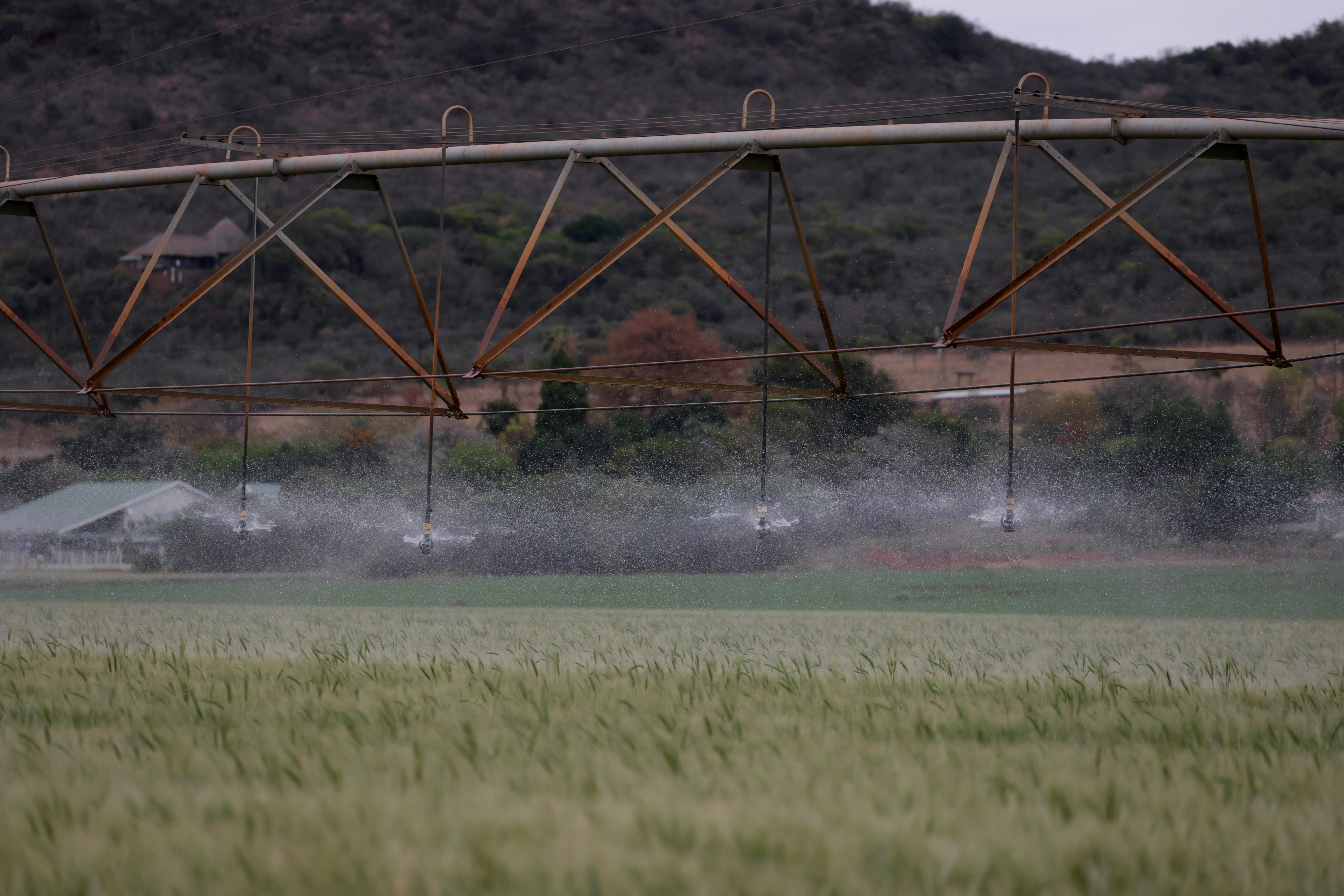
Precision control systems rely on real-time data to maintain optimal performance. Flow and pressure sensors serve as the critical eyes and ears of modern automation, delivering the feedback necessary for accurate, responsive control.

🎯 The Foundation of Feedback Control Systems
In industrial automation and process control, achieving consistent performance demands continuous monitoring and adjustment. Feedback control systems operate on a simple principle: measure the current state, compare it to the desired state, and make corrections. However, the quality of this control depends entirely on the accuracy and reliability of the sensors providing the data.
Flow and pressure sensors form the backbone of countless industrial processes, from water treatment facilities to pharmaceutical manufacturing. These instruments transform physical phenomena into electrical signals that controllers can interpret and act upon. Without precise measurement, even the most sophisticated control algorithms cannot maintain the tight tolerances required in modern production environments.
The integration of these sensors into feedback loops creates a responsive system capable of self-correction. When pressure drops below a setpoint, the controller receives this information instantaneously and adjusts valve positions or pump speeds accordingly. This closed-loop operation ensures stability and consistency that manual control simply cannot match.
Understanding Flow Sensor Technologies
Flow measurement technologies have evolved significantly, offering various methods suited to different applications. Each technology presents unique advantages depending on fluid characteristics, pipe size, accuracy requirements, and environmental conditions.
Differential Pressure Flow Meters
These traditional devices measure flow by creating a restriction in the flow path and measuring the pressure drop across it. Orifice plates, venturi tubes, and flow nozzles all operate on this principle. The relationship between pressure differential and flow rate follows established physics, making calculations straightforward and reliable.
The primary advantage lies in their simplicity and lack of moving parts. However, they do introduce permanent pressure loss in the system, which can impact energy efficiency. Accuracy typically ranges from 1% to 4% of full scale, adequate for many industrial applications.
Magnetic Flow Meters
Electromagnetic flow meters exploit Faraday’s law of induction, measuring voltage generated as conductive fluid moves through a magnetic field. This technology offers exceptional accuracy without obstructing flow, making it ideal for water, chemicals, and slurries.
These meters provide bidirectional measurement and maintain accuracy across a wide flow range. Their limitation is the requirement for electrically conductive fluids, ruling out use with hydrocarbons, gases, or deionized water.
Ultrasonic Flow Measurement
Ultrasonic meters use sound waves to determine flow velocity, either through transit-time or Doppler effect methods. Transit-time meters measure the difference in signal travel time with and against flow direction, while Doppler meters detect frequency shifts from particles or bubbles in the fluid.
The non-invasive nature of clamp-on ultrasonic meters makes them particularly valuable for retrofit applications or situations where pipe penetration is undesirable. Accuracy rivals that of magnetic meters when properly installed and configured.
Turbine and Positive Displacement Meters
Mechanical flow meters remain popular for their straightforward operation and high accuracy. Turbine meters use a rotor that spins at a rate proportional to flow velocity, while positive displacement meters trap discrete fluid volumes and count them.
These technologies excel in custody transfer and billing applications where accuracy is paramount. However, moving parts require maintenance and can be damaged by debris or excessive flow rates.
Pressure Sensor Fundamentals for Control Applications
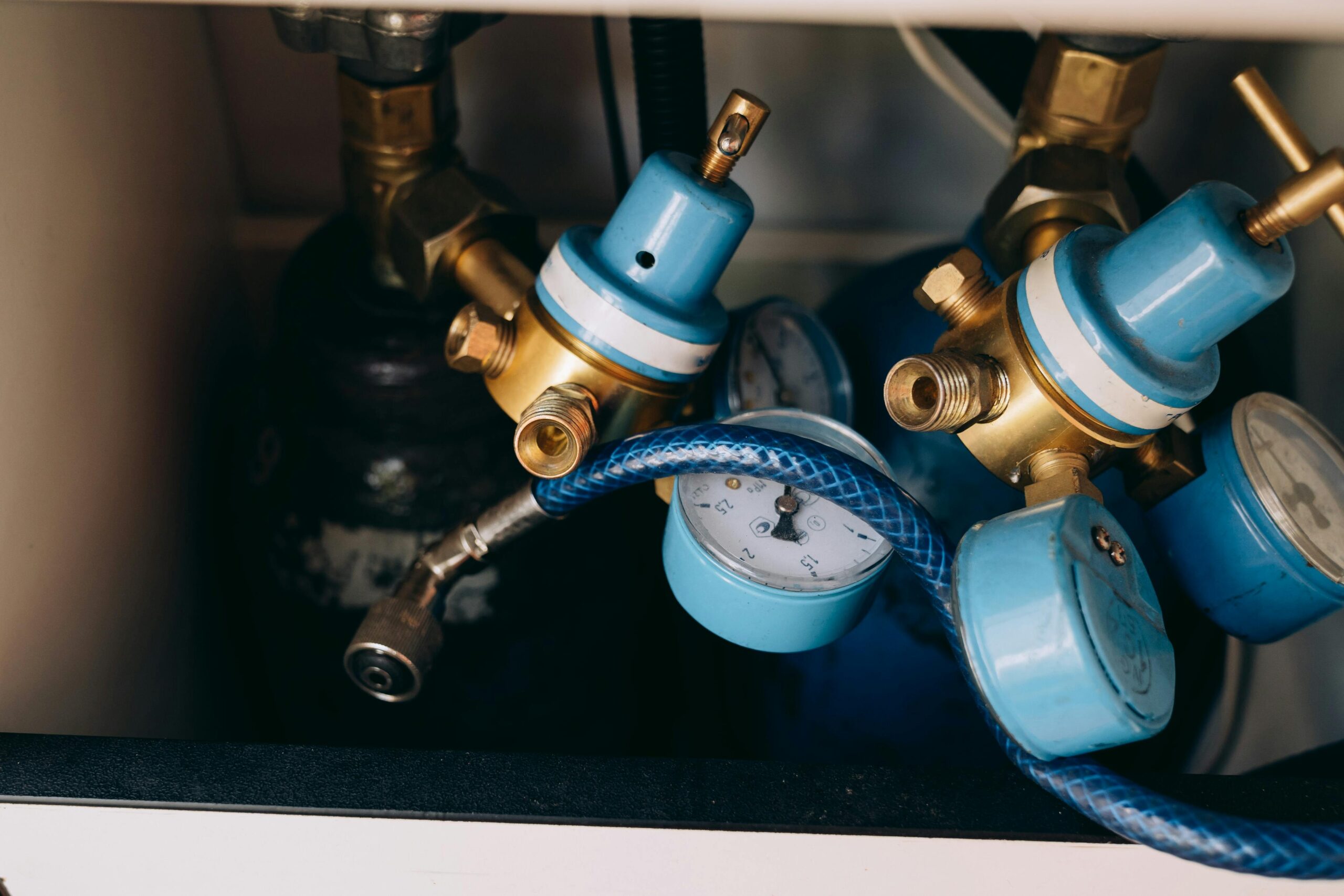
Pressure measurement provides critical information about system state and performance. Whether monitoring hydraulic systems, pneumatic circuits, or process vessels, pressure sensors enable precise control and safety monitoring.
Strain Gauge Pressure Transducers
The most common pressure sensing technology uses strain gauges bonded to a diaphragm that deflects under pressure. This mechanical deformation changes the electrical resistance of the gauges, producing a measurable signal proportional to applied pressure.
Modern strain gauge transducers offer excellent linearity, stability, and wide pressure ranges. They operate reliably in harsh environments and provide fast response times essential for dynamic control applications.
Capacitive Pressure Sensors
Capacitive sensors measure pressure by detecting changes in capacitance between a fixed plate and a movable diaphragm. This technology delivers outstanding sensitivity and accuracy, particularly at low pressures where other methods struggle.
The absence of mechanical linkages and minimal diaphragm deflection contribute to long-term stability. These sensors perform exceptionally well in applications requiring high overpressure protection and wide operating temperature ranges.
Piezoelectric Pressure Measurement
Piezoelectric sensors generate electrical charge when subjected to mechanical stress. This property makes them ideal for measuring dynamic pressure changes, such as engine combustion, shock waves, or pulsating flows.
While unsuitable for static measurements due to charge leakage, piezoelectric sensors offer unmatched frequency response and durability in dynamic applications. Their compact size allows installation in tight spaces where other technologies cannot fit.
⚙️ Integrating Sensors into Feedback Control Loops
Effective feedback control requires more than accurate sensors. The integration of measurement devices into control systems demands careful consideration of signal conditioning, communication protocols, and control strategies.
Signal Conditioning and Processing
Raw sensor signals typically require amplification, filtering, and linearization before controllers can use them effectively. Modern transmitters incorporate microprocessors that handle these tasks, outputting standardized signals like 4-20 mA or digital protocols.
The 4-20 mA current loop remains ubiquitous due to its noise immunity and ability to transmit over long distances. The live zero at 4 mA allows detection of sensor or wiring failures, a critical safety feature in many applications.
Digital communication protocols like HART, Profibus, and Modbus enable bidirectional communication, allowing configuration changes and diagnostic information retrieval without physical access to the sensor. This capability significantly reduces maintenance costs and downtime.
Control Algorithm Selection
The choice of control algorithm dramatically impacts system performance. Proportional-Integral-Derivative (PID) control remains the workhorse of industrial automation, providing excellent performance for most applications when properly tuned.
Proportional action responds to current error magnitude, integral action eliminates steady-state error, and derivative action anticipates future error based on rate of change. Balancing these three components optimizes response speed while minimizing overshoot and oscillation.
Advanced control strategies like model predictive control (MPC) or fuzzy logic offer superior performance in complex, nonlinear systems. However, they require more sophisticated implementation and deeper process understanding.
Achieving Superior Performance Through Sensor Selection
Choosing the right sensor for a specific application requires evaluating multiple factors beyond basic measurement range and accuracy specifications.
Accuracy and Repeatability Requirements
Accuracy defines how closely a measurement matches the true value, while repeatability indicates consistency in repeated measurements under identical conditions. Many applications tolerate modest accuracy if repeatability is excellent, since offset errors can be compensated through calibration.
Consider whether the application requires absolute accuracy or simply consistent relative measurements. Quality control processes often depend more on detecting changes than knowing exact values.
Response Time and Dynamic Performance
Control loop stability depends on sensor response time. Slow sensors introduce phase lag that limits achievable bandwidth and can cause instability if the controller acts on outdated information.
Fast processes like combustion control or vibration monitoring demand sensors with millisecond response times. Slower processes like temperature control in large vessels can tolerate sensors with multi-second time constants.
Environmental Considerations
Operating environment significantly impacts sensor selection and longevity. Temperature extremes, humidity, vibration, and electromagnetic interference all affect performance and reliability.
Chemical compatibility between sensor wetted materials and process fluids prevents corrosion and contamination. Pressure and flow sensors exposed to abrasive slurries or corrosive chemicals require specialized materials and construction.
📊 Optimizing Control Loop Performance
Installing quality sensors represents only the first step toward superior control. Optimization requires systematic tuning, regular maintenance, and continuous performance monitoring.
Proper Installation Techniques
Even the best sensors perform poorly if incorrectly installed. Flow meters require adequate straight pipe runs upstream and downstream to ensure fully developed flow profiles. Manufacturer specifications typically specify minimum straight run requirements.
Pressure sensor mounting location affects measurement accuracy. Installing too close to pumps or valves exposes sensors to pulsations and vibration that degrade performance. Impulse lines should be kept short and properly supported to minimize response lag and mechanical stress.
Calibration and Validation
Regular calibration maintains measurement accuracy over time. Establishing calibration intervals balances the cost of calibration against the risk of drift-induced errors. Critical measurements may require monthly verification, while stable sensors in benign environments might need annual calibration.
In-situ verification techniques allow checking sensor performance without removal from the process. Portable standards and comparison measurements provide confidence in ongoing accuracy between formal calibrations.
Loop Tuning Methodologies
Optimal PID tuning maximizes control performance while maintaining stability. Several proven methods exist, from simple trial-and-error adjustment to sophisticated autotuning algorithms.
The Ziegler-Nichols method provides a starting point by inducing sustained oscillation and calculating controller parameters from the ultimate gain and period. Cohen-Coon tuning offers improved performance for processes with significant dead time.
Modern controllers often include autotuning functions that systematically test process response and calculate optimal parameters automatically. While convenient, understanding the underlying principles enables manual refinement for exceptional performance.
Real-World Applications and Success Stories
Practical implementation of precision flow and pressure control delivers measurable benefits across diverse industries.
Water Treatment and Distribution
Municipal water systems use pressure sensors throughout distribution networks to maintain optimal pressure while minimizing leaks and water hammer. Flow meters at treatment plants ensure proper chemical dosing and detect unusual consumption patterns indicating leaks or unauthorized use.
Advanced control strategies balance multiple pumping stations to minimize energy consumption while meeting pressure and flow requirements at all customer locations. This optimization can reduce energy costs by 20-30% compared to traditional fixed-speed operation.
Chemical Processing
Precise flow control ensures accurate stoichiometry in chemical reactions. Mass flow controllers combine flow measurement with integral control valves, maintaining exact flow rates regardless of supply pressure variations.
Pressure control in distillation columns optimizes separation efficiency and product quality. Cascaded control strategies use column pressure as the primary variable and overhead condenser cooling as the manipulated variable, achieving tight control despite load disturbances.
Pharmaceutical Manufacturing
Regulatory requirements in pharmaceutical production demand validated, documented control systems. Flow and pressure sensors with digital communication provide audit trails and diagnostic information crucial for compliance.
Cleanroom pressurization systems maintain precise pressure differentials between spaces of different cleanliness classifications, preventing contamination migration. Multiple pressure sensors and coordinated control of supply and exhaust fans maintain these critical differentials despite door openings and other disturbances.
🔧 Troubleshooting Common Control Issues
Even well-designed systems occasionally exhibit control problems. Systematic troubleshooting identifies root causes and implements effective solutions.
Oscillation and Instability
Control loop oscillation indicates excessive controller gain or insufficient damping. Reducing proportional gain and increasing derivative action typically stabilizes oscillating loops, though at the cost of slower response.
Mechanical resonances in piping systems can create oscillations that no amount of detuning will eliminate. Adding dampeners or modifying pipe supports addresses the root cause rather than just the symptoms.
Sluggish Response
Slow control response often results from undersized valves, excessive process dead time, or overly conservative tuning. Identifying which factor dominates guides corrective action.
Sensor lag contributes to apparent process dead time. Selecting faster sensors or relocating them closer to the control point reduces this lag and allows more aggressive tuning.
Steady-State Error
Persistent offset between setpoint and measured value despite stable control indicates insufficient integral action. Increasing integral gain gradually eliminates offset while watching for induced oscillation.
Some processes exhibit nonlinear behavior where controller parameters optimal at one operating point perform poorly elsewhere. Gain scheduling adjusts parameters based on operating conditions, maintaining good performance across the entire range.
Future Trends in Sensor Technology and Control
Ongoing technological advancement continues improving measurement accuracy, reliability, and intelligence. Wireless sensors eliminate costly wiring while providing flexibility in sensor placement. Energy harvesting technologies power these devices from ambient sources, enabling truly autonomous operation.
Artificial intelligence and machine learning algorithms analyze sensor data to predict maintenance needs before failures occur. Pattern recognition identifies subtle changes indicating developing problems, allowing proactive intervention that prevents costly unplanned downtime.
Digital twin technology creates virtual replicas of physical systems, using real-time sensor data to maintain synchronization. Engineers test control strategies and optimize parameters in the digital environment before implementing changes in the real process, minimizing risk and maximizing performance.
💡 Maximizing Return on Investment
Investing in quality sensors and proper implementation delivers measurable returns through improved efficiency, reduced waste, and lower energy consumption. Documenting baseline performance before improvements enables quantifying benefits and justifying additional investments.
Training operators and maintenance personnel ensures they understand control system capabilities and proper care. Well-trained staff recognize abnormal behavior early and take appropriate corrective action before minor issues become major problems.
Establishing key performance indicators tracks control system effectiveness over time. Metrics like variability reduction, energy consumption, and product quality reveal opportunities for further improvement and demonstrate value to stakeholders.
The journey toward mastering precision control is continuous. As processes evolve and technology advances, opportunities emerge for incremental improvements that compound over time. Organizations that embrace this mindset of continuous improvement maintain competitive advantage through operational excellence.
Superior feedback control through proper sensor selection, installation, and optimization transforms good processes into exceptional ones. The combination of accurate measurement and intelligent control algorithms creates systems that respond instantly to disturbances, maintain tight tolerances, and operate efficiently under all conditions. Success requires understanding both the theoretical principles and practical considerations that separate adequate performance from true mastery.