The quest for efficient microalgae cultivation has sparked intense debate between traditional open pond systems and modern photobioreactor technology, each offering distinct advantages for maximizing biomass production.

🌊 Understanding the Fundamental Differences in Cultivation Systems
Microalgae cultivation represents one of the most promising avenues for sustainable biofuel production, pharmaceutical compounds, and nutritional supplements. The choice between open ponds and photobioreactors fundamentally shapes operational efficiency, capital investment, and ultimately, the success of any algae cultivation venture. These two systems represent opposite ends of the technological spectrum, with open ponds embracing simplicity and photobioreactors championing control and precision.
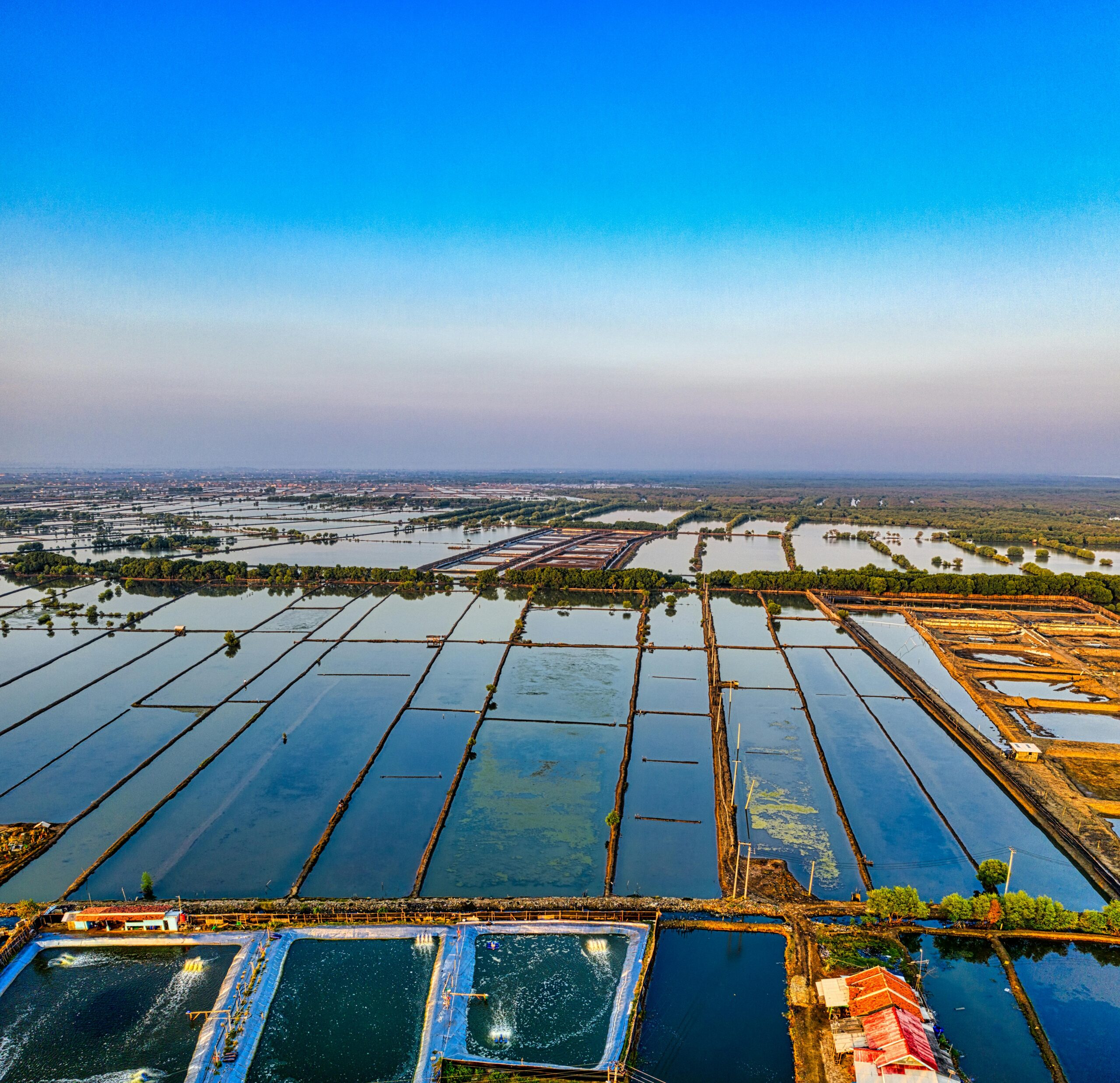
Open pond systems have existed for decades, utilizing natural water bodies or constructed raceways that expose algae cultures directly to environmental conditions. These systems rely on paddlewheels for circulation and depend entirely on sunlight for photosynthesis. Conversely, photobioreactors are closed cultivation systems—typically tubular or flat-panel designs—that isolate algae cultures from external contamination while allowing precise control over growth parameters.
The efficiency battle between these systems involves multiple dimensions: light utilization, water consumption, contamination resistance, temperature regulation, CO2 delivery, and scalability. Understanding these factors enables cultivators to optimize their operations based on specific production goals, geographic location, and available resources.
💡 Light Penetration and Photosynthetic Efficiency Showdown
Light availability represents the most critical factor in algae productivity. Photobioreactors excel in light path optimization, with designs that maximize surface area exposure while minimizing self-shading effects. Tubular photobioreactors can achieve light paths as short as 3-6 centimeters, ensuring that nearly all cells receive adequate photosynthetically active radiation (PAR).
Open ponds, by contrast, suffer from significant light limitation in deeper sections. While surface cells may experience photoinhibition from excessive light, cells at 15-20 centimeters depth receive minimal illumination. This creates a productivity paradox—the upper layer experiences stress while the lower layer remains underutilized. The average volumetric productivity in open ponds typically ranges from 0.05-0.15 g/L/day, compared to 0.2-1.5 g/L/day achievable in well-designed photobioreactors.
The Light-Dark Cycle Optimization Strategy
Photobioreactors offer superior control over light-dark cycling, a phenomenon crucial for photosynthetic efficiency. Rapid circulation through illuminated and dark zones prevents photosaturation and photoinhibition while optimizing the use of absorbed light energy. Research demonstrates that controlled light-dark frequencies between 1-10 Hz can increase productivity by 20-40% compared to continuous illumination.
Open ponds cannot replicate this advantage due to their shallow, horizontally oriented design and slower mixing rates. The paddlewheel-driven circulation provides mixing velocities of 15-30 cm/s, resulting in light-dark cycles measured in minutes rather than milliseconds or seconds as achievable in photobioreactors.
🌡️ Temperature Control: The Make-or-Break Factor
Temperature fluctuations dramatically impact algae growth rates, with most productive species thriving between 25-35°C. Open ponds experience temperature swings that can span 15-20°C between day and night, particularly in continental climates. These fluctuations reduce metabolic efficiency and can trigger stress responses that decrease lipid quality and overall biomass productivity.
Photobioreactors equipped with temperature control systems maintain optimal conditions continuously. Cooling systems prevent overheating during peak solar radiation, while heating mechanisms ensure nighttime temperatures remain within productive ranges. This thermal stability translates to consistent growth rates and predictable harvest schedules—critical factors for commercial operations.
The energy cost of temperature regulation in photobioreactors must be weighed against productivity gains. In tropical and subtropical regions, passive cooling through water spray systems or ground coupling can minimize energy consumption while maintaining temperature advantages over open ponds.
🔬 Contamination Control and Culture Purity
Perhaps the most compelling advantage of photobioreactors lies in contamination resistance. Open ponds remain vulnerable to invasive algae species, bacteria, fungi, and predators such as zooplankton and rotifers. A single contamination event can devastate entire production batches, requiring complete system shutdown, cleaning, and restart—a process that may consume weeks of lost productivity.
Closed photobioreactor systems virtually eliminate contamination risks through physical isolation. This enables cultivation of high-value species that cannot compete well in open environments, including delicate strains engineered for specific metabolite production. The ability to maintain monocultures reliably expands the commercial viability of species beyond the naturally dominant Spirulina and Chlorella varieties commonly grown in open ponds.
The Economics of Culture Purity
Culture purity directly impacts product quality and market value. Pharmaceutical and nutraceutical applications demand contamination-free production, making photobioreactors the only viable option for these premium markets. While open ponds can produce commodity products like animal feed supplements or basic biofuel feedstock, they cannot access high-margin applications where purity commands significant price premiums.
💧 Water Usage and Evaporation Challenges
Water scarcity increasingly constrains agricultural operations globally. Open ponds suffer substantial evaporation losses, particularly in arid climates where algae cultivation often occurs due to abundant sunshine. Evaporation rates can exceed 5-10 millimeters daily, translating to thousands of cubic meters of water loss per hectare annually. This water loss concentrates salts and other dissolved compounds, eventually requiring blowdown to maintain suitable culture conditions.
Photobioreactors minimize evaporation through closed-system design. Water losses occur only during harvesting and minor seepage, reducing total water consumption by 80-95% compared to open ponds. This water efficiency proves crucial for operations in water-stressed regions and significantly reduces the environmental footprint of cultivation facilities.
⚡ Carbon Dioxide Delivery and Utilization Efficiency
Efficient CO2 delivery maximizes photosynthetic rates and represents a significant operational consideration. Open ponds rely on surface diffusion and sparging systems that bubble CO2 through the water column. Transfer efficiency rarely exceeds 15-25%, with most injected carbon dioxide escaping to the atmosphere before algae can assimilate it. This inefficiency increases operational costs and environmental impact, particularly when using concentrated CO2 sources.
Photobioreactors achieve CO2 utilization efficiencies of 70-95% through controlled injection at optimal points within the culture flow path. The closed system prevents premature degassing, allowing dissolved CO2 to reach equilibrium with algal demand. Some advanced designs incorporate pH-controlled injection systems that respond in real-time to photosynthetic rates, further optimizing carbon utilization.
Integration with Industrial CO2 Sources
Both systems can integrate with industrial CO2 sources such as power plant flue gas or fermentation off-gas, but photobioreactors handle impurities more effectively. The controlled environment allows for gas conditioning and contaminant removal before culture exposure, protecting sensitive algae strains from toxic compounds like NOx and SOx present in many industrial emissions.
📊 Capital Investment and Operational Economics
The economic reality of algae cultivation often determines system selection more than technical performance. Open ponds require minimal capital investment, with construction costs ranging from $10,000-50,000 per hectare depending on site preparation requirements. Simple paddlewheels, basic monitoring equipment, and harvesting infrastructure comprise the major expenses.
Photobioreactors demand substantially higher capital investment, with costs ranging from $100,000 to over $1,000,000 per hectare equivalent depending on design complexity, materials, and automation level. Tubular systems generally cost less than flat-panel designs, but both significantly exceed open pond economics on initial investment.
However, operational efficiency and productivity differences can offset capital costs over time. The higher volumetric productivity of photobioreactors means smaller footprints produce equivalent biomass, reducing land costs in areas where real estate commands premium prices. Reduced water consumption, higher product purity, and lower contamination-related losses improve operational economics despite higher depreciation and maintenance costs.
🔄 Scalability and Production Flexibility
Open ponds scale linearly with impressive simplicity—adding production capacity requires additional land and basic infrastructure replication. This straightforward scaling appeals to operations targeting commodity markets where volume matters more than precision. Individual pond units can span multiple hectares, with some commercial facilities operating over 100 hectares of total cultivation area.
Photobioreactor scaling presents greater complexity. Modular designs allow incremental capacity increases, but maintaining uniform performance across multiple units requires sophisticated process control. Temperature gradients, flow dynamics, and light distribution become increasingly challenging as systems scale. Most commercial photobioreactor installations operate at 1-10 hectare equivalent scales, with few examples of larger deployments.
Production Diversification Advantages
Photobioreactors excel in production flexibility, allowing rapid species transitions and specialized cultivation protocols. A facility can produce multiple high-value products sequentially or simultaneously in separate modules, responding quickly to market demands. Open ponds lock operators into species that naturally dominate in local environmental conditions, limiting product diversification potential.
🌍 Geographic and Climatic Considerations
Location dramatically influences system performance and economic viability. Open ponds perform optimally in warm, arid climates with minimal seasonal temperature variation—conditions found in limited geographic regions globally. Temperate climates with significant seasonal changes prove challenging for open pond operations, often limiting productive seasons to 6-8 months annually.
Photobioreactors expand viable cultivation geography through environmental control. Greenhouse-enclosed systems or those with active heating can maintain year-round production even in cold climates, though energy costs increase substantially. This geographic flexibility enables cultivation closer to end-markets, reducing transportation costs and carbon footprint for fresh or minimally processed products.
🚀 Emerging Hybrid Approaches and Innovation
Progressive cultivators increasingly explore hybrid systems that combine open pond economics with photobioreactor control. These approaches use photobioreactors for seed culture production and early growth stages, then transfer to open ponds for final biomass accumulation. This strategy minimizes contamination risks during vulnerable early growth while leveraging open pond scalability for bulk production.
Another innovation involves semi-closed systems that provide moderate environmental control at intermediate costs. Covered raceways with CO2 enrichment and partial temperature control offer compromise solutions that balance capital investment against productivity improvement. These systems achieve 30-50% productivity increases over traditional open ponds while costing 50-70% less than fully closed photobioreactors.
🎯 Strategic System Selection for Cycle Optimization
Optimal system selection depends on clearly defined production goals, target markets, and available resources. Operations targeting commodity biofuel feedstock or basic protein supplements find open ponds economically compelling despite lower productivity. The ability to process massive volumes at minimal cost creates viable business models for low-margin products.
High-value applications—pharmaceutical ingredients, specialized pigments, omega-3 fatty acids, or novel proteins—justify photobioreactor investment through quality premiums and reliable production. The ability to validate production processes and maintain regulatory compliance proves essential for these markets, making photobioreactors not merely advantageous but necessary.
Geographic context matters enormously. Desert regions with abundant land, high solar radiation, and access to non-potable water favor open pond economics. Urban or peri-urban operations with limited space, access to waste CO2, and proximity to premium markets benefit from photobioreactor efficiency and product quality advantages.
🔍 Looking Forward: Technology Convergence and Evolution
The efficiency battle between open ponds and photobioreactors continues evolving as innovations emerge in both domains. Advanced materials reduce photobioreactor costs while improving durability and performance. Computational fluid dynamics optimize flow patterns and light distribution. Artificial intelligence enables predictive process control that maximizes productivity while minimizing resource consumption.
Open pond technology advances through better understanding of mixing dynamics, improved harvesting techniques, and selective cultivation strategies that favor target species naturally. Genetic engineering may soon produce robust algae strains that dominate open cultures while producing valuable metabolites, potentially closing the product quality gap between systems.
The future likely holds diversified cultivation landscapes where system selection reflects specific applications rather than ideological preference. Both technologies occupy important niches in the expanding bioeconomy, with complementary roles supporting different market segments and production scales.
Successful algae cultivation operations increasingly recognize that maximizing growth requires matching system characteristics to production objectives, available resources, and target markets. Neither open ponds nor photobioreactors universally superior—each excels under specific circumstances. The true battle for efficiency is won not through technology selection alone but through optimizing every aspect of the cultivation cycle to align with clearly defined strategic goals and operational realities.